Founder story
Growing up, I didn’t just wear one brace.
I wore three.
Milwaukee.
Cheneau.
Boston.
Each one came with its own rules, its own discomfort, its own invisible weight.
The Milwaukee brace was the first. Metal bars. A neck ring. Something you don’t forget.
The Chêneau brace was painful and rigid, visible through clothes. Something you want to forget.
The Boston brace felt smaller but tighter. Something you just want to get through.
With each brace came appointments.
X-rays.
Physiotherapy.
Conversations about curves and degrees.
Conversations about surgery and how it’s “the only option.”
At that age, you don’t fully understand what “progression” means. And you don't really understand the distant future that doctors talk about when they say “surgery.”
You just know that your body is being measured. Managed. Monitored.
You’re told to wear it.
You’re told it will help.
But no one really asks how it feels.
Not just physically.
Emotionally.
I learned discipline early. I learned compliance.
But I didn’t learn how to process what it meant to live in a brace.
There was no place to log the discomfort.
No place to say “today was harder.”
No gentle reminder that wearing it for 12 hours was already brave.
So I built what I wish I had.
Tina isn’t a clinical tool.
She’s a companion.
For the person who feels alone in their brace.
For the parent or guardian trying to understand.
For anyone who wants to be seen, not just corrected.
I know the sound of the straps.
The marks on the skin. The painful ribs from too much pressure.
The physio exercises.
The fear behind the word “surgery.”
And I also know the strength it builds.
Tina exists because brace wear is more than compliance.
It’s identity. It’s learning how to endure.
And no one should go through it quietly.
The story didn’t end when the braces did.
As an adult, I returned to my body — this time differently.
Not as something to correct.
Not as something to measure.
But as something to understand.
Physiotherapy taught me something braces never could:
That scoliosis isn’t only about restriction — it’s also about awareness.
Breath.
Alignment.
Strength.
The same spine that once felt controlled became something I could work with.
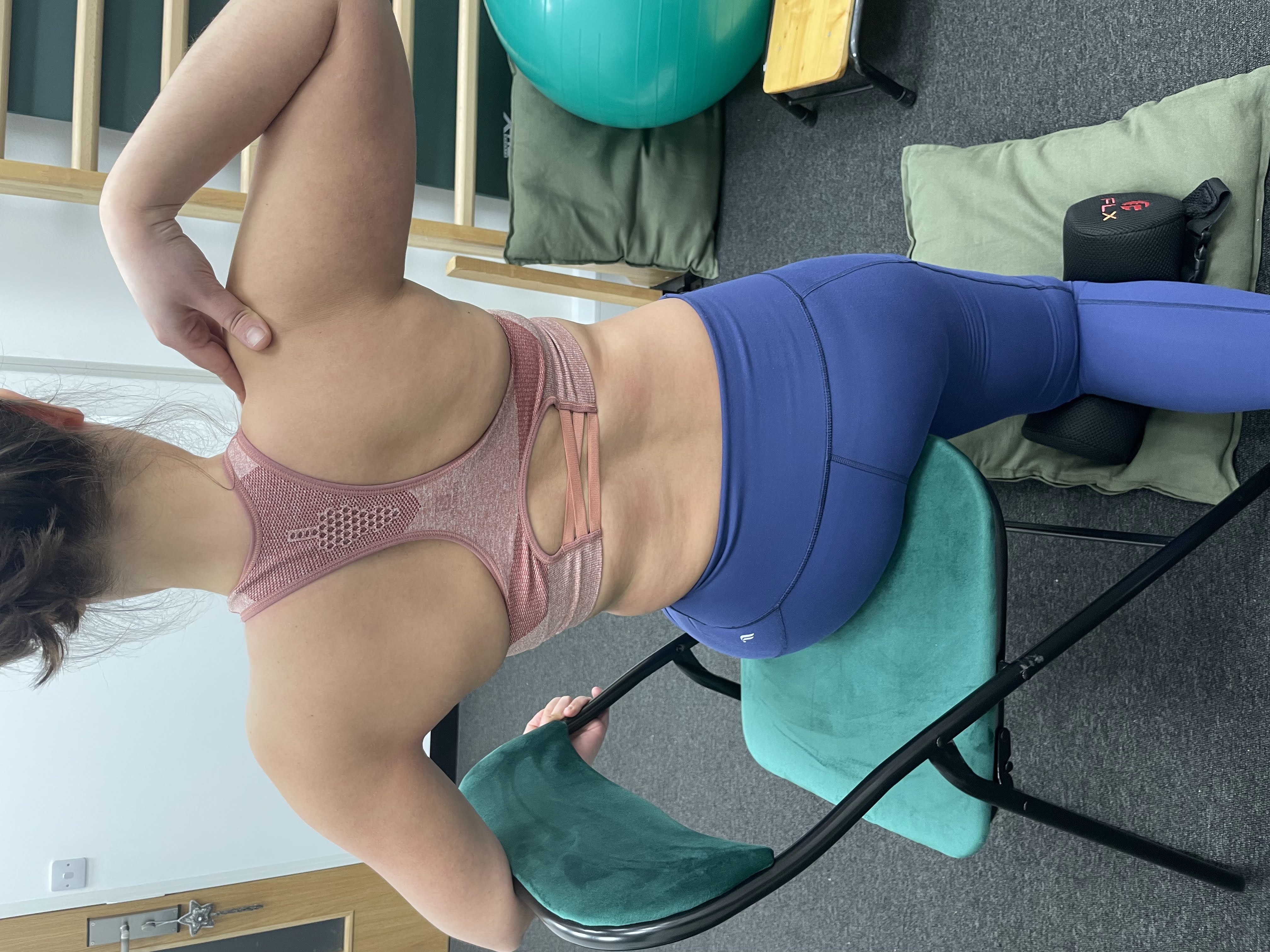
That photo of me doing Schroth?
It’s not about “fixing” myself.
It’s about staying in conversation with my body.
And that’s what Tina is built on.